
-300x200.png)



Mostafa Elsayed Elsayed Marzouk,亚太科技与创新大学(APU)设计创新管理硕士学生,因其在公共设施设计类别中受到本地文化启发的项目“Murni”,获得了2023年全球顶峰设计竞赛的大奖。
Murni 在马来语中意为“纯净”,它不仅仅是一个公共洗手间,更是马来西亚文化的一种反映。Mostafa 设计它来满足更干净公共设施的需求。该项目利用了从自然中收集和过滤的雨水,提出了一种可持续的环境方法。设计融合了木槿花和传统马来木雕的图案,以美学吸引人,将现有技术与创新相结合,打造了一个自洁的公共设施。
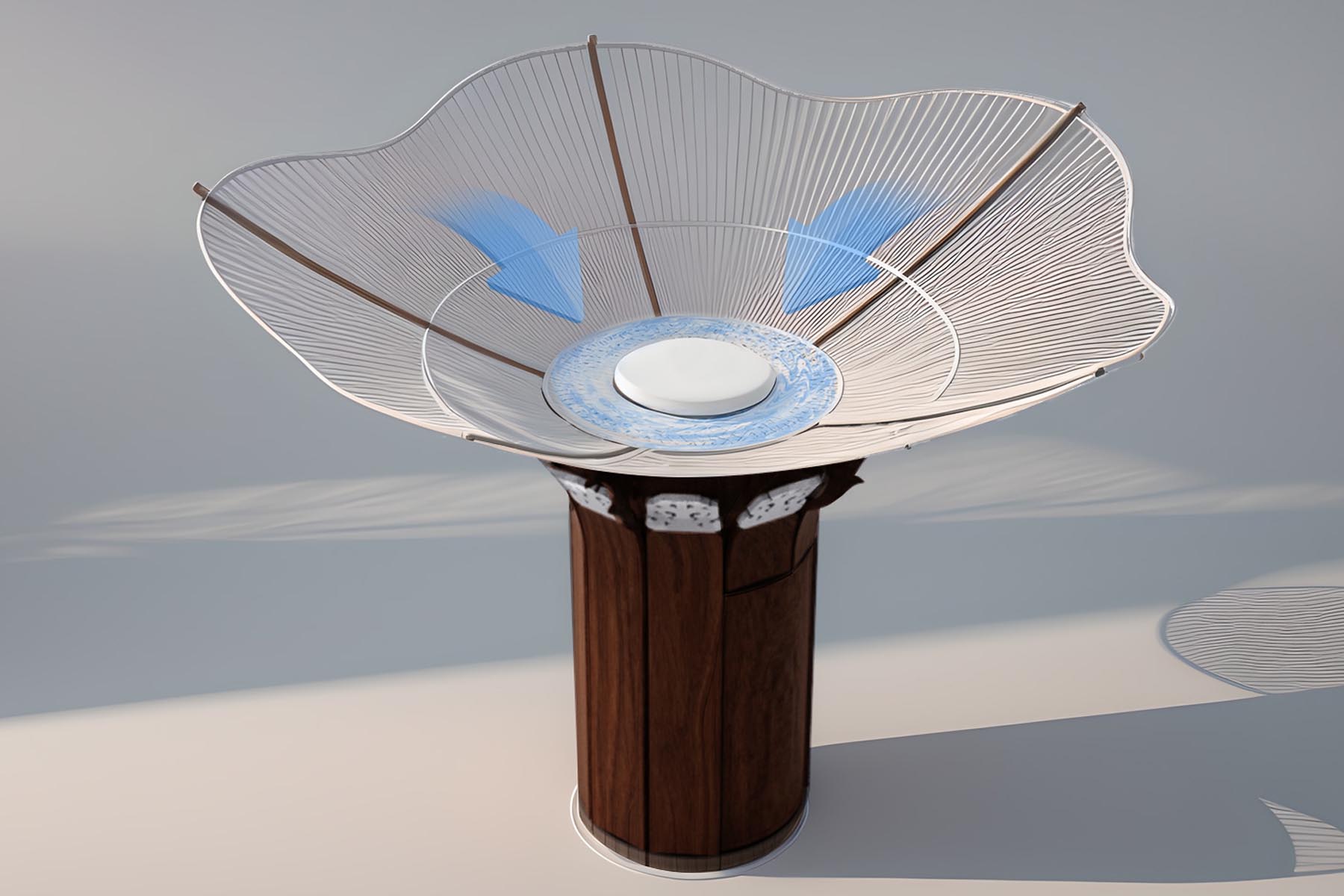
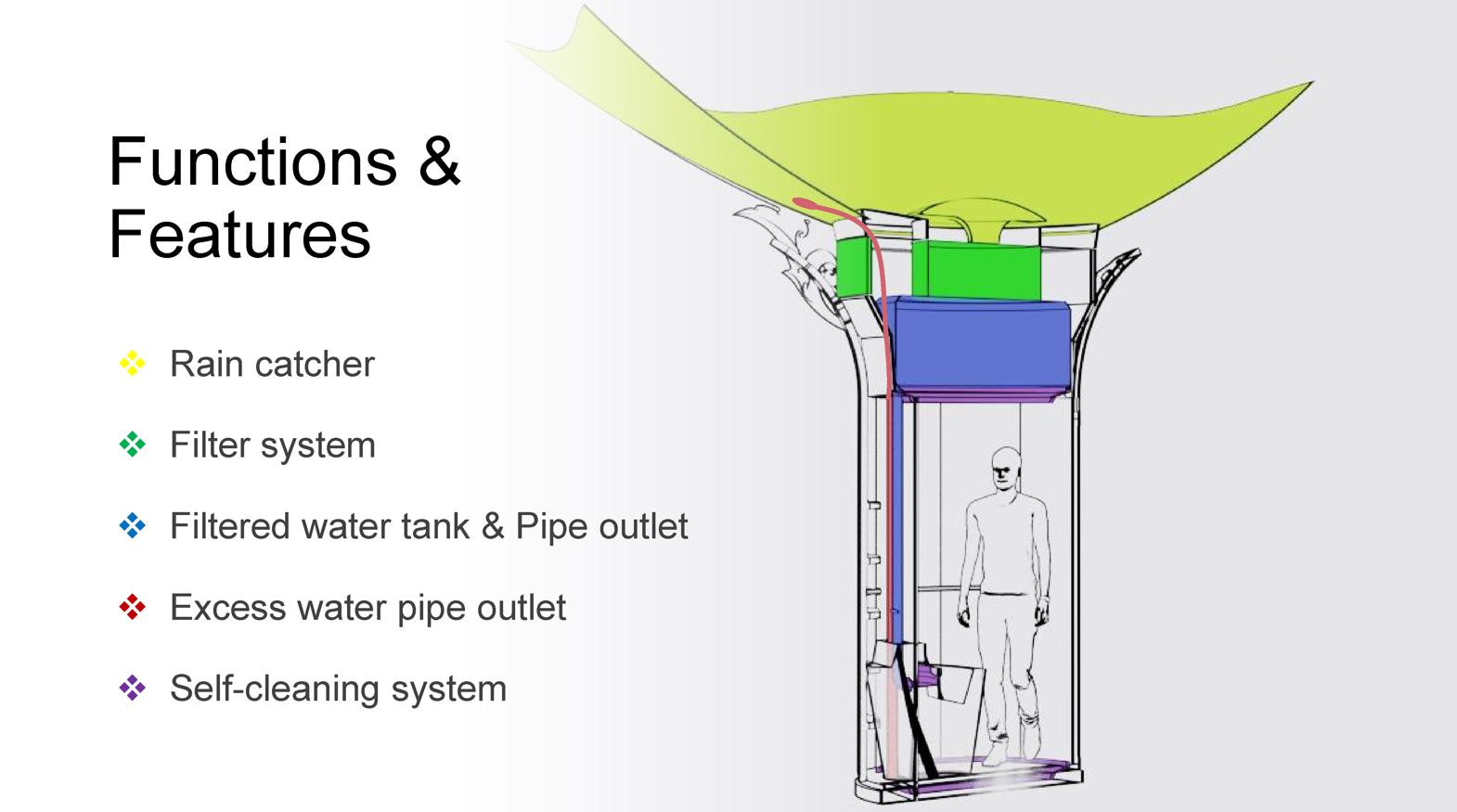
“Murni”将现有技术与创新相结合,创建了一个自洁的公共洗手间,通过收集马来西亚的雨水、过滤并将其用作水源来适应马来西亚的气候。这有助于将当前的设施发展成为干净、一致和高效的条件。
在雨水不足的情况下,Murni 无缝切换到当地供水,保证了在降雨量有限的时期的不间断运行,并保持卫生标准。此外,该项目与联合国可持续发展目标(UN SDGs)一致,特别是目标11(使城市和人类定居点包容、安全、具有弹性和可持续)和目标6(确保人们获得清洁水和卫生设施)。
由 APU 传媒、艺术与设计学院(SoMAD)的认证工业设计师(CIDe)讲师 Eekang Ooi 先生监督和指导,该项目获得了2023年全球顶峰设计竞赛的大奖——基于本地文化的公共设施设计项目奖。
该竞赛是APU与全州大学(JJU)的合作,旨在促进创新和文化交流。它将韩国和马来西亚的大学汇集在一起,设计受各自文化启发的产品概念。
JJU 工业设计系的 Song Joo 教授领导了该项目,得到了韩国教育部、产学合作领袖(LINC 3.0)计划和韩国研究基金会的支持。他与SoMAD的讲师 Liew Yong Kian 先生密切合作,为这次竞赛做出了贡献。
这项在线竞赛于2023年9月至12月举行,收到了来自各个大学的50多个设计参赛作品。其中包括 Murni 在内的十个入围项目被提交给评委会,获奖名单于2024年初公布。
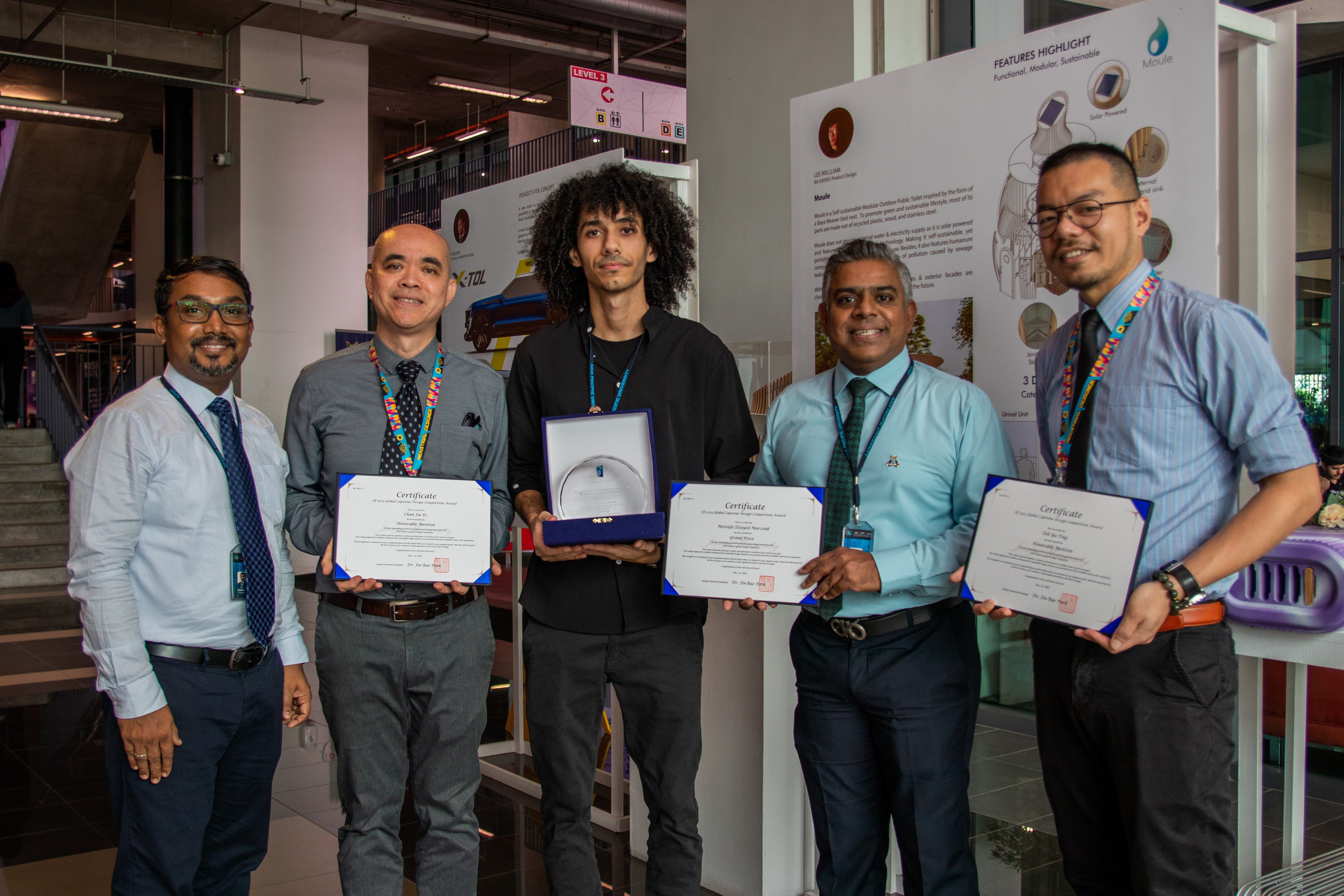
获奖者与学术界共享了一刻喜悦。从左至右:SoMAD 的学术领导 Edwin Pio Rufus Samiraj 先生;SoMAD 的 CIDe 讲师 Eekang Oo i先生;Mostafa Elsayed Elsayed Marzouk;APU 的首席执行官、教授、工程师、博士 Vinesh Thiruchelvam;以及 SoMAD 的讲师 Liew Yong Kian 先生,与2023年全球顶峰设计竞赛大奖的证书和奖杯合影。
Mostafa 原籍埃及,强调了设计中文化融合的重要性。他说道:“这项竞赛不仅仅是奖项和认可,它还为与国际设计社群建立联系提供了独特的机会。”
Eekang Ooi 先生强调了APU学生通过与国际设计师共同参与而获得的曝光,提供了多样化的观点,并推动了传统思维的边界。他总结道:“评委的反馈不仅仅是一种评估,而是通过全球视角理解和欣赏设计的一堂大师课。”
除了 Mostafa 的成功之外,APU 工业设计学生 Teh Yu Ting 和 Chan Jia Er 也获得了评委的荣誉提名,其中包括新加坡国立大学(NUS)的 Kee-Hong Song 教授和亚洲红点设计奖的主席 Ken Koo。韩国全州设计中心的 J.H. Namgung 也是评委之一。
————————————————————————————————
Mostafa Elsayed Elsayed Marzouk, a Master of Arts in Design Innovation Management student from the Asia Pacific University of Technology & Innovation (APU), has been awarded the Grand Prize in the 2023 Global Capstone Design Competition for his project, ‘Murni,’ in the Public Facilities Design category, inspired by local culture.
Murni, which means ‘pure’ in Malay, is not just a public washroom but a reflection of Malaysian culture. Mostafa designed it to meet the demand for cleaner public facilities. The project utilises rainwater harvested and filtered from nature, presenting a sustainable environmental approach. The design incorporates a pattern of Hibiscus blossoms and traditional Malay wood carvings for aesthetic appeal, merging existing technology with innovation to create a self-cleaning public utility.
‘Murni’ combines existing technology with innovation to create a self-cleaning public washroom which adopts Malaysia’s climate by harvesting rainwater, filtering it, and using it as a water supply. This helps evolve current facilities into clean, consistent, and efficient conditions.
Murni, a cutting-edge sanitary solution, maximises water efficiency and cleanliness by harvesting Malaysia’s rainfall through a strategically positioned rain catcher. A sophisticated filtration system purifies rainwater before it reaches the tank.
Its automatic self-cleaning system utilises rainwater and eco-friendly solutions, ensuring thorough sanitisation of the toilet bowl and surfaces. Advanced sensors and energy-efficient components minimise electricity usage, optimising sustainability and cost-effectiveness.
Mostafa Elsayed Elsayed Marzouk, a Master of Arts in Design Innovation Management student from the Asia Pacific University of Technology & Innovation (APU), has been awarded the Grand Prize in the 2023 Global Capstone Design Competition for his project, ‘Murni,’ in the Public Facilities Design category, inspired by local culture.
Murni, which means ‘pure’ in Malay, is not just a public washroom but a reflection of Malaysian culture. Mostafa designed it to meet the demand for cleaner public facilities. The project utilises rainwater harvested and filtered from nature, presenting a sustainable environmental approach. The design incorporates a pattern of Hibiscus blossoms and traditional Malay wood carvings for aesthetic appeal, merging existing technology with innovation to create a self-cleaning public utility.
In case of insufficient rainwater, Murni seamlessly switches to the local water supply, guaranteeing uninterrupted operation and maintaining hygiene standards during periods of limited rainfall. Additionally, the project aligns with the United Nations Sustainable Development Goals (UN SDGs), specifically Goal 11 (make cities and human settlements inclusive, safe, resilient, and sustainable) and Goal 6 (ensure access to clean water and sanitation).
Supervised and mentored by Mr Eekang Ooi, a Certified Industrial Designer (CIDe) Lecturer at APU’s School of Media, Art and Design (SoMAD), the project secured the Grand Prize in the Global Capstone Design Competition 2023 – Public Facilities Design Project Based on Local Culture Award.
The competition, a collaboration between APU and Jeonju University (JJU), aimed to promote innovation and cultural exchange. It brought together Korean and Malaysian universities to design product concepts inspired by their respective cultures.
Professor Song Joo of JJU’s Department of Industrial Design spearheaded the initiative, supported by the Korean Ministry of Education, the Leaders in Industry-University Cooperation (LINC 3.0) program, and the Korea Research Foundation. He worked closely with Mr Liew Yong Kian, Lecturer of SoMAD, for this competition.
The online competition, which took place from September to December 2023, received over 50 design entries from various universities. Ten shortlisted projects, including Murni, were presented to a panel of judges, and the winners were announced in early 2024.
A moment of joy was shared between the winner and academics. L-R: Mr Edwin Pio Rufus Samiraj, Academic Leader of SoMAD; Mr. Eekang Ooi, CIDe-Lecturer of SoMAD; Mostafa Elsayed Elsayed Marzouk; Prof. Ir. Eur. Ing. Ts. Dr. Vinesh Thiruchelvam, CIEO of APU; and Mr. Liew Yong Kian, Lecturer of SoMAD, posing with the certificate and trophy of the Grand Prize in the 2023 Global Capstone Design Competition.
Mostafa, originally from Egypt, emphasised the significance of cultural infusion in design. He stated, “The competition is more than just awards and recognition; it creates a unique opportunity to network with international design communities.”
Mr Eekang Ooi highlighted the exposure APU students gained by participating alongside international designers, providing diverse viewpoints and pushing the boundaries of conventional thinking. He concluded, “The feedback from the judges was not simply an assessment but a masterclass in understanding and appreciating design through a global lens.”
In addition to Mostafa’s success, APU Industrial Design students Teh Yu Ting and Chan Jia Er received honourable mentions from the judges, including distinguished figures like Prof. Kee-Hong Song from the National University of Singapore (NUS) and Ken Koo, President of the Asia Red Dot Design Award. J.H. Namgung of the Jeonbuk Design Centre in Korea also served as one of the judges.








查看评论
若要留言或按"赞",需先成为本刊订户。