



(2025年6月9日, 吉隆坡) — 在全球贸易环境变化,特别是美国加强对华芯片出口管制的背景下,半导体产业链正经历显著调整。多家国际芯片巨头加速将生产环节向东南亚地区分散,其中马来西亚凭借其深厚的产业基础和独特优势,正逐渐成为这一趋势中的主要受益者。
作为全球第六大半导体出口国,马来西亚在全球半导体封装、测试和组装(OSAT)市场占据约13%的份额,半导体产业贡献了其国内生产总值(GDP)的约25%。尤为值得注意的是,美国消耗的芯片中,超过五分之一在马来西亚生产。
马来西亚雪兰莪州行政议员黄思汉先生分析了其中的关键因素:“在美国加强对中国芯片出口管制的背景下,马来西亚凭借其在半导体供应链后端(封测)的多年经验,正逐渐成为中美科技竞争中的赢家。”他强调,“马来西亚是一个中立国家,与中国、美国、欧洲以及中东国家都保持着良好关系。同时,相较于许多国家,马来西亚的营商成本相对较低。此外,我们每年毕业的大学生基本能够满足当前市场的技术需求。”

近年来,马来西亚吸引了国际芯片巨头数百亿美元的投资。人工智能芯片领域的领导者英伟达(NVIDIA)已宣布与当地合作伙伴共同投资逾40亿美元建设人工智能数据中心。德国芯片制造商英飞凌(Infineon)也在当地进行了巨额投资建设新工厂。
为抓住机遇并进一步扩大半导体产业版图,马来西亚各级政府积极推动产业发展。雪兰莪州已于去年成立了首个集成电路(IC)设计园。州政府计划在未来五年内建立四座此类园区,目标是吸引至少30家IC设计公司入驻。第二个园区预计将于今年6月落成。
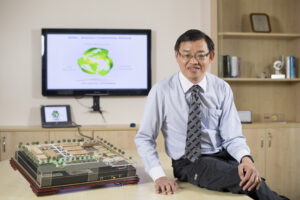
马来西亚集成电路园区(Malaysia IC Design Park)首席执行官杨凯斌先生表示:“我们收到了不少邀约,希望每年能再开设一个新的IC设计园区。随着入驻公司数量的增长和规模扩大,未来三年,一些企业有望在马来西亚资本市场达到上市条件。”
马来西亚正利用其成熟的产业链、中立的政治立场、相对成本优势和人才储备,在全球半导体供应链重构中占据更有利的位置,展现出强劲的发展势头。
Trade Shifts Propel Malaysia’s Semiconductor Industry Forward
(June 9, 2025 Kuala Lumpur) — Amidst evolving global trade dynamics, particularly heightened US export controls on chips to China, semiconductor supply chains are undergoing significant realignment. Major international chip giants are accelerating the diversification of production segments towards Southeast Asia. Within this trend, Malaysia, leveraging its established industry foundation and unique advantages, is emerging as a key beneficiary.
As the world’s sixth-largest semiconductor exporter, Malaysia holds approximately 13% of the global market share in Outsourced Semiconductor Assembly and Test (OSAT). The semiconductor sector contributes about 25% to Malaysia’s Gross Domestic Product (GDP). Notably, over one-fifth of the chips consumed in the United States are produced in Malaysia.
Mr. Wong Siew Hai, Selangor State Executive Councillor, highlighted the key factors: “Against the backdrop of the US strengthening export controls on chips to China, Malaysia, with its years of experience in the back-end (packaging and testing) of the semiconductor supply chain, is steadily becoming a winner in the US-China tech competition.” He emphasized, “Malaysia is a neutral country maintaining good relations with China, the US, Europe, and Middle Eastern nations. Furthermore, compared to many countries, business costs in Malaysia are relatively lower. Additionally, our annual university graduates generally possess the skills required by the current market.”

In recent years, Malaysia has attracted investments totaling billions of US dollars from leading international chip companies. NVIDIA, a leader in AI chips, has announced a collaboration with local partners to invest over $4 billion in establishing an Artificial Intelligence (AI) data center. German chip manufacturer Infineon is also making substantial investments to build new facilities locally.
To capitalize on this momentum and expand its semiconductor footprint, Malaysian authorities at various levels are actively promoting industry development. Selangor State established its first Integrated Circuit (IC) design park last year. The state government plans to build four such parks within the next five years, targeting to attract at least 30 IC design companies. The second park is scheduled for completion in June this year.
Mr. Yeong Khai Poon, CEO of the Malaysia IC Design Park, stated: “We have received numerous requests, hoping to open one new IC design park every year. As the number and scale of resident companies grow, it is anticipated that within the next three years, some companies will meet the listing requirements on Malaysia’s capital market.”
Leveraging its mature supply chain, neutral political stance, relative cost advantages, and talent pool, Malaysia is securing a more favorable position in the restructuring of the global semiconductor supply chain, demonstrating robust growth potential.






查看评论
若要留言或按"赞",需先成为本刊订户。